Electric vehicles
Electric vehicles cover battery-electric passenger cars, light commercial vehicles, trucks and buses, plus the charging infrastructure that supports them. Global BEV sales reached approximately 14.5M units in 2025 (around 16% of new vehicle sales globally and over 50% in China), up from under 2M in 2019. The category is going through the messy mid-cycle reset every emerging industry hits - Western demand growth has flattened, Chinese OEMs took global cost and product leadership, and capital markets repriced the entire EV-pure-play cohort from peak valuations.
The category spans premium BEV OEMs, mass-market BEVs, electric pickups and SUVs, electric commercial vehicles and buses, public DC fast-charging networks, residential and workplace AC charging, battery cell and pack manufacturing, and EV financing and leasing.
Revenue comes mostly from vehicle sales (the dominant line for OEMs), regulatory credit sales, charging-session fees and subscriptions for the networks, hardware sales of chargers to site hosts and the home market, battery cell sales to other OEMs, and a growing line of recurring software-attached revenue per active vehicle.
Electric vehicles is part of Mobility.
$714B
Global market size
91
Public companies
Key VC investors
Key strategic buyers
How electric vehicles companies monetize?
Electric vehicle companies monetize through vehicle sales, battery cell and pack sales, and per-kWh charging session revenue.
Vehicle sales
Direct sale of EVs to consumers and fleets. Tesla, BYD and the Chinese EV-pure-plays operate D2C; Western incumbents sell through dealers. Volume-driven business with 10-25% gross margins depending on brand positioning and pricing power.
Battery cell & pack sales
CATL, BYD, LG Energy Solution, Samsung SDI and Panasonic sell cells and packs to OEMs under multi-year supply contracts. Capital-intensive industrial business with 15-25% gross margins at scale and double-digit capex intensity.
Charging session revenue
Per-kWh or per-session fees paid by EV drivers at public chargers. Utilisation drives unit economics - most public DC networks need 15-20% utilisation to clear cash breakeven.
Charging network subscriptions
Monthly memberships giving discounted rates and reserved access. Tesla's Supercharger subscriptions, EVgo Reward+ and IONITY Passport sit here.
Software-attached vehicle services
Connected-services subscriptions, premium ADAS unlocks and OTA-priced features. Tesla FSD remains the canonical example; legacy OEM uptake outside flagship models is still uncertain.
Regulatory credit sales
ZEV and CO2 credits sold to legacy OEMs to comply with emissions standards. Tesla earned $2.8B in 2024 on credit sales; the line is volatile and shrinks as the rest of the industry electrifies.
Electric vehicles valuations in May 2026
Public electric vehicles comps trade at 1.9x EV/Revenue. Median revenue multiple across electric vehicles M&A deals was 1.5x in the last 12 months. Median revenue multiple across electric vehicles VC rounds was 8.8x in the last 12 months.
1.9x
Median EV/Revenue as of May 2026 for public electric vehicles companies
16x
Tesla is the highest valued public electric vehicles company based on EV/Revenue (excluding outliers)
1.5x
Median EV/Revenue across electric vehicles M&A deals in the last 12 months
8.8x
Median EV/Revenue across electric vehicles VC rounds in the last 12 months
Electric vehicles market segments
Major electric vehicle segments include premium BEV OEMs, mass-market BEVs and public DC fast charging.
Premium BEV OEMs
EV-pure-play and premium brands targeting the $50k+ segment. Tesla Model S/X, NIO, Lucid, Polestar, Mercedes EQ and Porsche Taycan sit here. The segment is most exposed to high-end BEV demand softness through 2025. Key players: Tesla, NIO, Lucid, Polestar.
Mass-market BEVs
Sub-$40k passenger BEVs aimed at mainstream consumers. BYD, MG, Geely, Hyundai-Kia (Ioniq 5/EV3), Volkswagen ID.3/4 and Renault 5 lead globally; Xiaomi SU7 launched into this segment in 2024 to standout response. Key players: BYD, Hyundai-Kia, Volkswagen, Xiaomi.
Electric pickups & SUVs
EV trucks and large SUVs targeting the US market specifically - Ford F-150 Lightning, Rivian R1T/R1S, GMC Hummer EV, Chevrolet Silverado EV and Tesla Cybertruck. Demand softer than projected; F-150 Lightning production cut in late 2024. Key players: Tesla, Rivian, Ford, GM.
Electric commercial vehicles
Battery-electric vans, medium-duty trucks and Class 8 tractors. BYD leads in China commercial; Ford E-Transit, Mercedes eSprinter and Rivian EDV serve the van market. Daimler Truck eActros, Volvo VNR Electric and Tesla Semi cover heavy-duty. Key players: BYD, Daimler Truck, Volvo Trucks, Rivian.
Electric buses
Battery-electric city buses and coaches sold mostly to transit agencies and fleet operators. Yutong and BYD dominate globally with most production in China; Proterra (US, Chapter 11 in 2023, assets sold to Phoenix Motor and Volvo) and Lion Electric struggled. Key players: BYD, Yutong, Solaris (CAF), Volvo Buses.
Public DC fast charging
150-350kW public chargers along highways and urban corridors. Tesla Supercharger opened to other OEMs from 2024 (NACS adoption); EVgo, ChargePoint, Electrify America and IONITY anchor the rest of the US and Europe. Utilisation and uptime are the make-or-break operating metrics. Key players: Tesla, EVgo, ChargePoint, IONITY.
AC charging & home/workplace
Level 2 chargers for residential, workplace and destination use. ChargePoint, Wallbox, Pod Point, easee and ABB lead hardware; the software and networking layer is highly fragmented. Key players: ChargePoint, Wallbox, Pod Point, easee.
Battery manufacturing
Cell and pack production at gigawatt-hour scale. CATL ~37% global share, BYD ~16%, LG Energy Solution ~14%, then Samsung SDI, Panasonic, CALB and SK On. Northvolt filed for Chapter 11 in late 2024 after liquidity collapse. Key players: CATL, BYD, LG Energy Solution, Panasonic.
Fractional CFO, financial modelling and deal advice for electric vehicles companies
See how Flow helps electric vehicles founders.
We speak founders' language and have great operational understanding of electric vehicles businesses.
Book an intro call - we'll look under the hood and recommend concrete next steps.
Fractional CFO
For founders who want to improve their FP&A functions, build an investor-ready financial model, and prepare for the next VC round.

Capital raising
For bootstrapped and already-VC-backed entrepreneurs who are looking to raise late stage venture or growth capital.

M&A
For category-leading technology companies who are exploring exit alternatives with either financial or strategic acquirers.

Key electric vehicles KPIs to track
BEV deliveries, vehicle gross margin, battery cost per kWh and charging utilisation are the metrics investors track in electric vehicles.
| KPI | Definition |
|---|---|
| BEV deliveries | Battery-electric vehicles delivered to end customers. The headline volume metric for OEMs and the line analysts price off for EV-pure-plays. |
| Vehicle gross margin (ex-credits) | Gross margin on vehicle sales excluding regulatory credits. Tesla's 18-20% sets the benchmark; the leading Chinese OEMs sit at 15-20%; loss-making startups run materially negative. |
| Battery cost per kWh | Pack-level cost of the battery. Crossed below $100/kWh in 2025 on a global average basis; LFP leading the decline. The single biggest variable in BEV unit economics. |
| Charging utilisation | Average kWh dispensed per stall per day, often expressed as utilisation percentage. Most public DC networks need 15-20% utilisation to clear cash breakeven. |
| Network uptime | Percentage of charging stalls available and functional. The single biggest driver of customer satisfaction for public charging; Tesla Supercharger network sets the benchmark above 99%. |
| ASP (average selling price) | Revenue per vehicle delivered. Reads mix shift across BEV trims and the impact of price cuts - Tesla's 2023-24 cuts and BYD's 2025 pricing reset are the canonical examples. |
| Production capacity utilisation | Vehicles produced against installed plant capacity. EV-startups (Lucid, Rivian, Polestar) all run below 50% - the structural drag on gross margin. |
| FCF per vehicle delivered | Free cash flow divided by vehicle deliveries. The cleanest read on real profitability once capex, working capital and inventory build are accounted for. |
Main electric vehicles players globally
The most active electric vehicle companies and category leaders globally.
| Company | HQ | Overview |
|---|---|---|
Tesla tesla.com |  Austin Austin | Reference EV-pure-play OEM. Around 1.8M deliveries in 2025, Cybertruck ramping, FSD v13 commercialised in North America and Supercharger network opened to most other OEMs under NACS. Listed NASDAQ: TSLA. |
BYD byd.com |  Shenzhen Shenzhen | Vertically integrated EV and battery maker that overtook Tesla in global BEV unit sales in Q4 2023 and again in 2025. Sells finished vehicles and Blade-platform cells to third-party OEMs including Toyota and Ford. Listed HK: 1211. |
NIO nio.com | Shanghai | Premium Chinese EV brand and the only OEM running battery-swap at scale (over 3,000 swap stations in China by 2025). Launched Onvo sub-brand in 2024 and Firefly compact brand in 2025. Listed NYSE: NIO. |
Li Auto lixiang.com | Beijing | Profitable Chinese EV maker built on extended-range electric SUVs (L7, L8, L9). Launched first pure-BEV (Mega) in 2024 to weaker reception. Listed NASDAQ: LI and HK: 2015. |
Xpeng xpeng.com | Guangzhou | Chinese EV maker investing heavily in in-house ADAS (XNGP) and humanoid robotics. Volkswagen took a 4.99% stake in 2023 and signed a joint development agreement. Listed NYSE: XPEV and HK: 9868. |
Rivian rivian.com | Irvine | US EV maker focused on adventure SUVs, pickups and delivery vans (R1S, R1T, EDV). Volkswagen invested $5.8B in a software-and-platform JV announced in 2024. R2 mid-size SUV ramping in 2026. Listed NASDAQ: RIVN. |
Lucid Motors lucidmotors.com | Newark | Premium BEV maker funded largely by Saudi PIF (~60% ownership), which committed an additional $1.5B in 2024. Air sedan in production; Gravity SUV ramped in 2025. Listed NASDAQ: LCID. |
Polestar polestar.com |  Gothenburg Gothenburg | Premium EV brand majority-owned by Geely. Polestar 2, 3 and 4 in market; Polestar 5 launching 2026. Volvo divested its stake to Geely Sweden Automotive Investment in 2024. Listed NASDAQ: PSNY. |
ChargePoint chargepoint.com | Campbell | Largest North American EV charging network by installed ports, mostly Level 2 destination chargers. Restructured in 2024 with material headcount cuts after demand softened. Listed NYSE: CHPT. |
Xiaomi EV mi.com | Beijing | Smartphone-maker Xiaomi launched the SU7 sedan in March 2024 to standout demand - over 200,000 orders in the first 24 hours. Second model YU7 in production from 2025. Part of Xiaomi Corp (HK: 1810). |
Need to build a financial model that actually works?
Financial modelling and a fractional CFO to pinpoint the levers that actually move the P&L.
Key electric vehicles market trends
Chinese EV exports and the tariff response, the Western BEV demand reset and LFP overtaking NMC chemistry are reshaping electric vehicles right now.
Chinese EV exports and the tariff response
BYD, Geely, Chery, MG (SAIC) and the EV-native players added several million units of export capacity through 2025. EU set 35% provisional tariffs on Chinese BEVs in October 2024; US raised duties to 100% in May 2024. Brazil, Southeast Asia, MENA and Australia continue to absorb the volume despite occasional local tariff response.
Western BEV demand reset
BEV growth in the US and Western Europe slowed sharply through 2024-25 as subsidies wound down, charging infrastructure lagged and consumer enthusiasm cooled. Ford F-150 Lightning production cut; GM pushed back BrightDrop and Equinox EV; Mercedes refocused on premium ICE. The reset is most acute in the $40-60k mass-premium segment.
LFP overtakes NMC chemistry
LFP became the dominant cell chemistry globally in 2024 driven by lower cost, longer cycle life and Chinese supply leadership. NMC retains share in the premium long-range segment. Pack-level prices fell below $100/kWh on a global average basis in 2025; sodium-ion and solid-state are in pilot production for 2027-28 launches.
Tesla NACS becomes the US charging standard
Ford, GM, Rivian, Mercedes, Hyundai-Kia, Volvo and most other US-market OEMs signed up to NACS through 2023-24, with adapter access to Tesla Superchargers from 2024 and native NACS ports from 2025. The CCS standard is effectively losing North America. Tesla materially expanded the addressable Supercharger revenue line.
EV charging consolidation and bankruptcies
Allego (Euronext: ALLG) went private via Madeleine Charging in 2024; Tritium filed administration in early 2024; Volta acquired by Shell in 2023; ChargePoint material headcount cuts. The category is consolidating around Tesla, EVgo (US scale DC), Electrify America (VW captive), IONITY (European JV) and a handful of national-champion operators.
Battery maker stress and Northvolt collapse
Northvolt filed for Chapter 11 in November 2024 after liquidity ran out - the most prominent Western cell-manufacturing failure of the cycle. Scania, BMW and VW cancelled or rescheduled supply contracts. Capital has retrenched to incumbents (CATL, LG ES, Samsung SDI, Panasonic) and Korean-led North American plants; Western new-entrant cell makers face a much harder funding environment.
Similar verticals to electric vehicles
Explore niches like AutomotiveTech, automotive software, transportation & logistics software and ridesharing.
Explore other sectors
We know tech inside & out.
We live and breath tech - true understanding of how startups operate is fundamental at what we do.










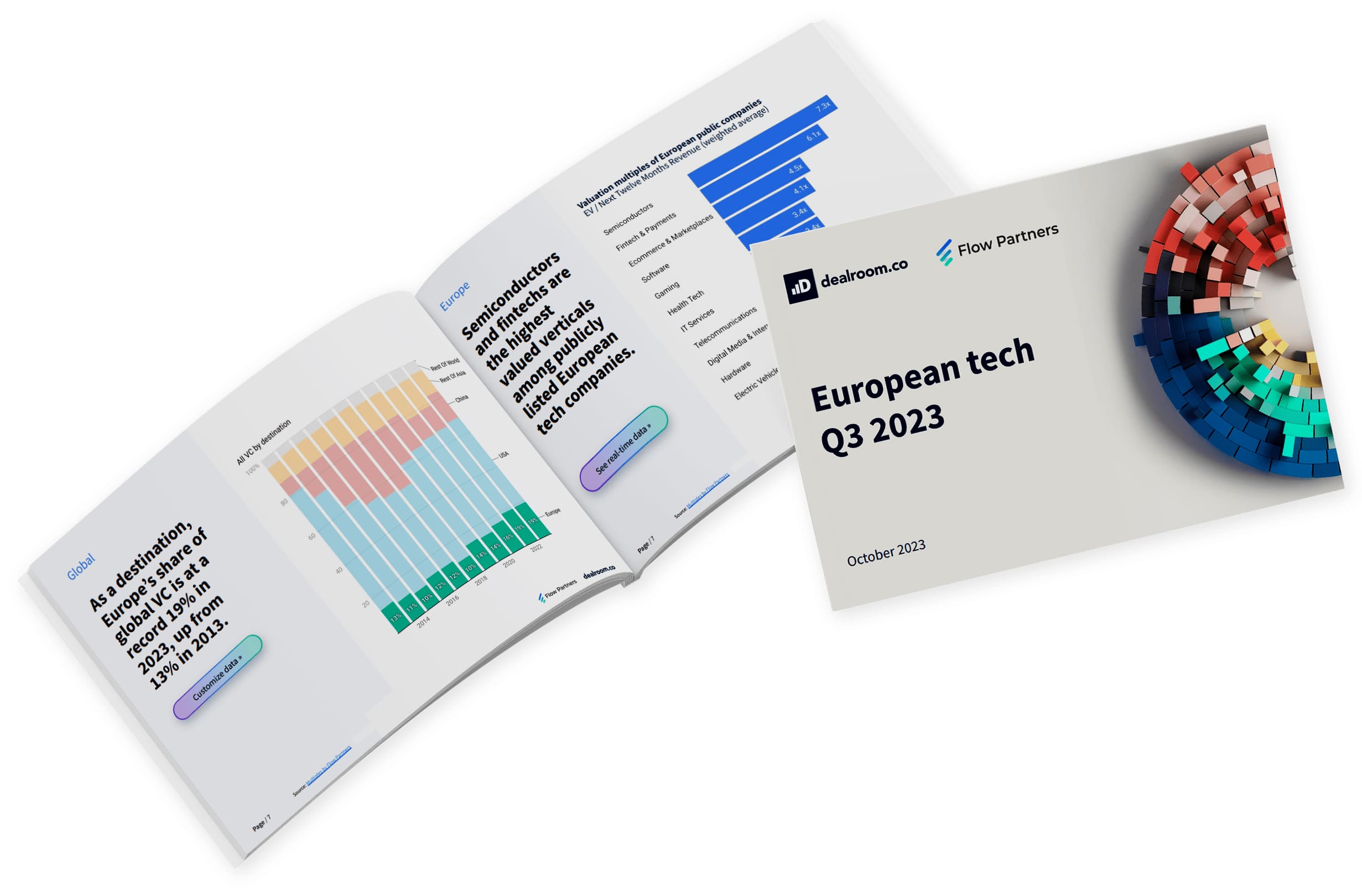
Recent insights across electric vehicles and beyond











Talk to us
Schedule a call to get a health check on your business and see how we could help.
Fractional CFO
- Fractional CFO for Software
- Fractional CFO for AI & ML
- Fractional CFO for Fintech
- Fractional CFO for Consumer internet
- Fractional CFO for Digital media
- Fractional CFO for E-commerce & marketplaces
- Fractional CFO for Consumer products
- Fractional CFO for Mobility
- Fractional CFO for Digital health
- Fractional CFO for Industrial technology
- Fractional CFO for Digital infrastructure
- Fractional CFO for IT services
Stages
Countries
- UK Fractional CFO
- Ireland Fractional CFO
- France Fractional CFO
- Germany Fractional CFO
- Spain Fractional CFO
- Portugal Fractional CFO
- Italy Fractional CFO
- Netherlands Fractional CFO
- Belgium Fractional CFO
- Switzerland Fractional CFO
- Austria Fractional CFO
- Denmark Fractional CFO
- Sweden Fractional CFO
- Norway Fractional CFO
- Finland Fractional CFO
- Poland Fractional CFO
- Estonia Fractional CFO
- US Fractional CFO
- Canada Fractional CFO
- Mexico Fractional CFO
- Brazil Fractional CFO
- UAE Fractional CFO
- Australia Fractional CFO
Cities
- London Fractional CFO
- Dublin Fractional CFO
- Paris Fractional CFO
- Berlin Fractional CFO
- Madrid Fractional CFO
- Lisbon Fractional CFO
- Milan Fractional CFO
- Amsterdam Fractional CFO
- Brussels Fractional CFO
- Zurich Fractional CFO
- Vienna Fractional CFO
- Copenhagen Fractional CFO
- Stockholm Fractional CFO
- Oslo Fractional CFO
- Helsinki Fractional CFO
- Warsaw Fractional CFO
- Tallinn Fractional CFO
- New York Fractional CFO
- Toronto Fractional CFO
- Mexico City Fractional CFO
- São Paulo Fractional CFO
- Dubai Fractional CFO
- Sydney Fractional CFO